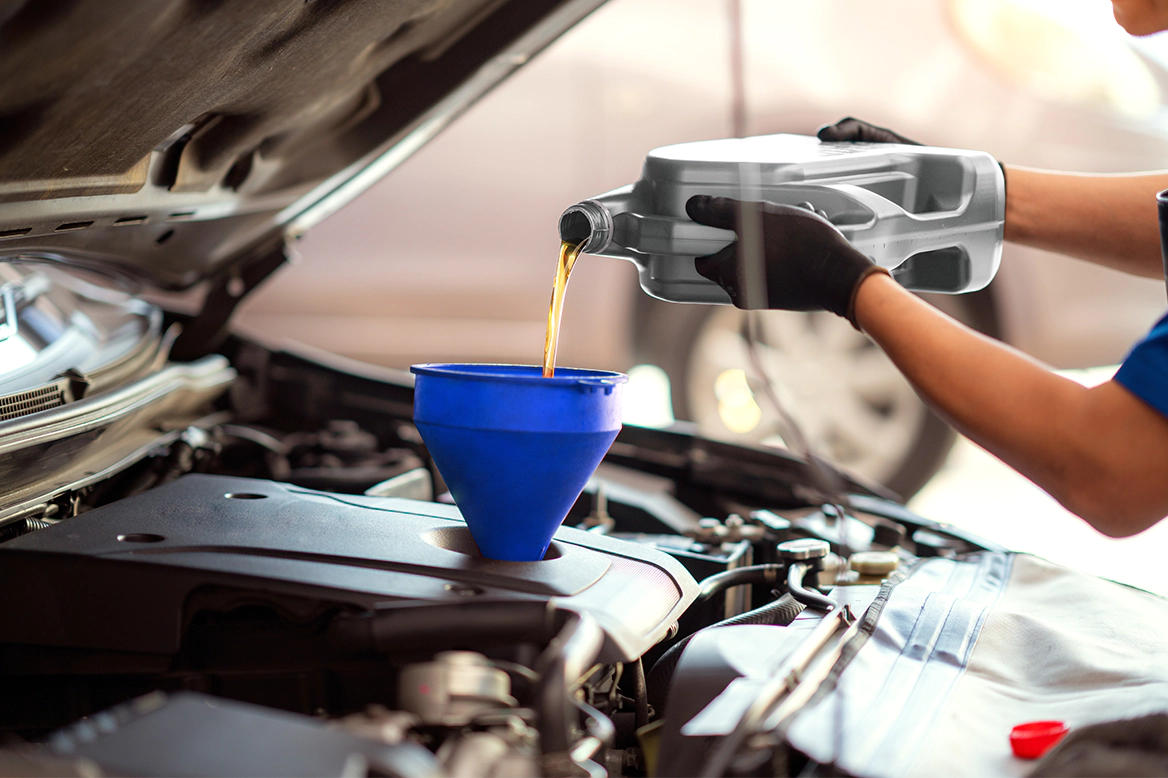
Why Engine Oil Matters
Engine oil serves several essential functions simultaneously. It lubricates moving components, reducing the metal-to-metal contact that causes wear. It carries heat away from parts the cooling system cannot reach directly. It contains detergent additives that help keep internal engine surfaces clean by suspending contaminants in the oil until the next change. And it helps seal the small gaps between pistons and cylinder walls that contribute to compression.
Over time, engine oil degrades. The base oil itself oxidises with repeated heating and cooling cycles. The additive package — which includes detergents, anti-wear compounds, and viscosity modifiers — gets consumed. Combustion byproducts accumulate, and the oil becomes less effective at each of its key functions.
An oil change removes the degraded oil and replaces it with fresh oil that restores all of these protective properties. It's a relatively inexpensive service that has a meaningful effect on long-term engine condition.
Choosing the Right Oil Specification
Not all engine oils are the same, and using the wrong specification can reduce protection or, in some cases, cause problems. The main factors that define oil specification are:
Viscosity Grade
Viscosity describes how freely oil flows at different temperatures. A grade like 5W-30 indicates the oil flows well at low temperatures (the "5W" refers to winter performance) and maintains adequate thickness at high operating temperatures (the "30" refers to operating viscosity). Using an oil with the wrong viscosity for your engine can affect flow rates, pressure, and protection, particularly during cold starts.
Performance Standard
Engine oils are tested against standards set by organisations such as ACEA (European) and API (American), and many vehicle manufacturers specify their own approval codes — such as VW 504 00, BMW Longlife-04, or MB 229.5. These manufacturer approvals indicate that the oil has been tested and confirmed compatible with specific engine designs, emissions systems, and extended service intervals. We consult your vehicle's service documentation to identify the correct specification.
Synthetic vs Conventional
Most modern vehicles specify fully synthetic or semi-synthetic oil. Full synthetics offer better performance across temperature extremes and are more resistant to breakdown, making them preferable for modern turbocharged engines and those with particulate filters. We use the appropriate oil type for your specific vehicle.
What Happens During an Oil Change at Auto Repair Sale
The process is methodical and covers the oil change itself plus a few routine checks that make sense to carry out at the same time:
- The vehicle is lifted on a ramp for safe underside access
- The old oil is drained completely, allowing adequate time for drainage
- The oil filter is replaced — a new filter should always accompany a new oil fill
- The drain plug is refitted with a new sealing washer where applicable
- Fresh oil is added to the specified quantity and grade
- We check coolant level, brake fluid level, power steering fluid, and windscreen washer fluid
- We run the engine briefly and check for any leaks at the drain plug and filter
- We note the mileage and date for the next recommended change
Oil Change Intervals
Service intervals vary depending on the vehicle, the oil specification used, and how the vehicle is driven. Many modern vehicles with extended-service synthetic oils specify intervals of 15,000 to 30,000 km or based on an oil life monitoring system. Older vehicles, or those driven in harder conditions — frequent short trips, dusty environments, towing — may benefit from more frequent changes.
The most reliable guide is your vehicle's manufacturer service schedule. If you're unsure what interval applies to your vehicle, we can check the service documentation and advise accordingly.
Driving beyond the recommended oil change interval doesn't always produce immediate problems, but the protective properties of degraded oil are reduced, and accumulated contaminants can contribute to internal deposit buildup over time.
Other Fluid Services
Beyond engine oil, several other vehicle fluids degrade with use and age and require periodic replacement. These are often grouped with or scheduled around an oil change:
- Coolant (antifreeze): Degrades over time and loses its corrosion inhibitor effectiveness. Most manufacturers recommend replacement every 3 to 5 years.
- Brake fluid: Absorbs moisture and should typically be replaced every 2 years. See our brake service page for more detail.
- Power steering fluid: Can degrade and become contaminated, affecting steering feel in hydraulic systems.
- Transmission fluid: Often overlooked but important for gearbox longevity. Interval varies widely by vehicle.
If you're booking an oil change and would like us to check the condition of other fluids at the same time, let us know and we'll include those checks.
Practical note: If you're not sure when your oil was last changed or what grade is currently in the engine, we can help. We'll check the current oil condition and advise on whether an immediate change is needed or whether you have time remaining on the current fill.